Migrating off deprecated Twilio Programmable Chat? Switch to our Free Twilio Chat Alternative (10K MAU) — complete with free end-to-end data migration and full Pro-tier power at $0.
Twilio built its business on carrier infrastructure. SMS, voice, programmable phone numbers — that's where the company made its name, and that's where its engineering depth genuinely lives.
In-app chat arrived later, and the trajectory is worth understanding. Twilio launched Programmable Chat as a dedicated in-app chat API for developers building arbitrary applications. By 2022, the standalone Programmable Chat API was officially deprecated, with Twilio directing developers to migrate to Conversations — its omnichannel messaging API that includes in-app chat as one of several communication channels. When a company stops maintaining a product and points developers elsewhere, that's a clear enough signal about where the investment is going.
There's also a Flex-specific component called Programmable Chat in Flex — part of Twilio's customer service workbench product — that's being retired in June 2026. That affects teams using Twilio Flex for contact center workflows.
The broader direction was already clear from 2022. In-app chat has not been Twilio's primary focus in recent years, as evidenced by the deprecation of Programmable Chat in favor of Conversations.
The Best Twilio Chat Alternatives in 2026
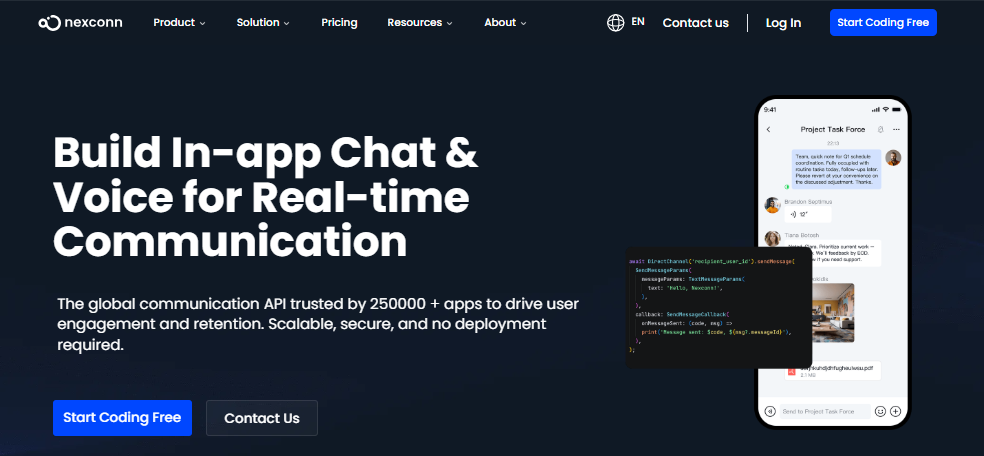
Nexconn
Nexconn is the option on this list that was designed from the start for the use cases where Twilio's architecture runs into its limits: social apps, gaming communities, marketplaces, dating platforms, and any product where in-app messaging is the reason users come back.
A complete product architecture
Most chat platforms offer some version of the same three building blocks: one-to-one and group messaging, a high-volume open channel for live scenarios, and some form of community structure. Nexconn covers all of these — Direct & Group Channels for high-trust private interaction, Open Channels for ephemeral high-velocity scenarios with unlimited concurrent users, and Community Channels for structured, persistent ecosystems.
Where the architecture diverges is in what "Community Channels" actually means. What Nexconn calls Community Channels is a fully hierarchical structure with public/private sub-channels, granular role-based permissions, persistent message history, and group controls — comparable to what Discord provides, but fully owned within your own infrastructure.
A social layer, not just a messaging layer
The social layer sits on top of all of this. A complete friend management system — add, delete, block, request flows — ships natively. Per-member follow alerts within groups. Targeted messaging to selected group members without broadcasting to everyone. Full group ownership transfer without disrupting channel structure. For apps where user relationships drive retention, the alternative is building this logic on your own backend — engineering work that compounds as the product grows and has nothing to do with what you're actually trying to ship.
Includes 20+ pages of infrastructure insights and growth strategies.
Infrastructure built for emerging markets
Nexconn's SD-CAN (Software Defined - Communication Accelerate Network) spans 3,000+ nodes across 233 countries and territories, maintaining sub-120ms end-to-end latency. Traffic routes through the nearest available node rather than the public internet — a distinction that matters considerably more for platforms serving users in Southeast Asia, the Middle East, or Latin America than it does in Western Europe.
Polaris monitoring system
The Polaris monitoring system provides real-time visibility into delivery rates, connection health, and latency distribution — operational observability that most platforms require separate tooling to achieve.
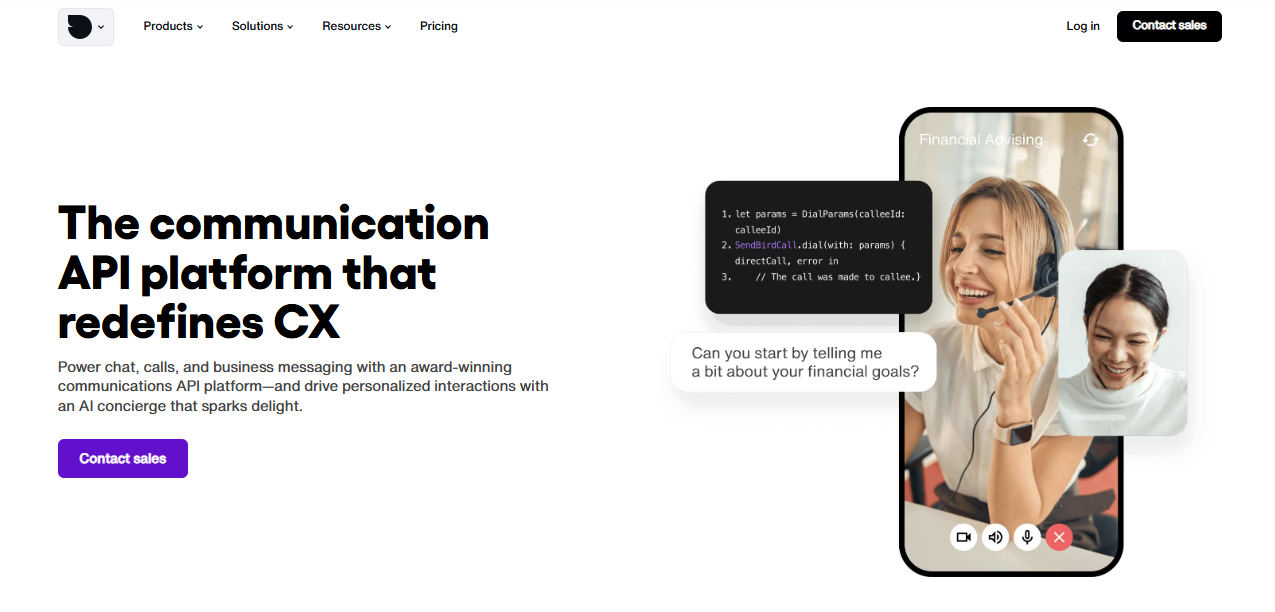
Sendbird
Well-established in marketplace and on-demand platforms. The documentation is thorough, the SDK support is broad, and teams that need to ship quickly against a defined spec tend to reach for it as a default. The pricing reflects its enterprise positioning — $399/month entry point, with overage fees for peak concurrent connections reaching $5.00 per connection on top of the plan's included quota — which works at that tier but creates predictability problems for teams experiencing rapid or spiky growth.
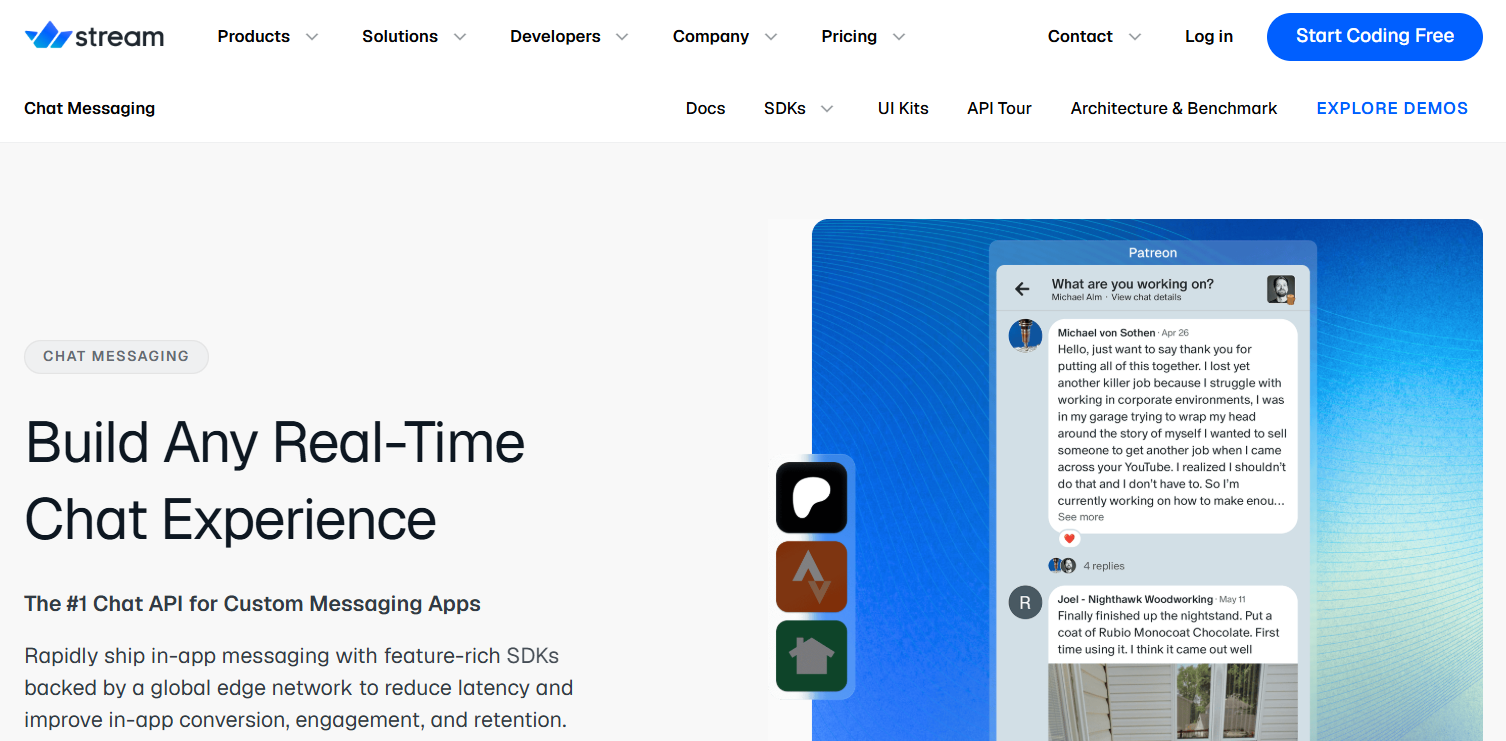
Stream
Developer-friendly API surface with clean abstractions and one of the better pre-built UIKits in the category. Teams building social features alongside chat often find the mental model intuitive. Stream offers a clean API surface and solid UIKits, but for deep social-layer features — friend graphs, group ownership transfers, role-based sub-communities — teams often find themselves building custom logic on top of its infrastructure rather than getting these natively.
PubNub
Real-time data streaming roots, which translates well to presence and live event scenarios. Handles chat, but wasn't built for it as a primary use case. The social layer — friend systems, group management, community architecture — requires separate engineering work. The 100-message in-memory cache default means that without enabling paid Storage & Playback, chat products face persistence gaps for message history and catch-up recovery. Billing by API request rather than MAU makes cost forecasting genuinely difficult as usage patterns evolve.
Ably
Reliability-first positioning: guaranteed message ordering, connection state recovery, four-nines availability. For infrastructure-sensitive deployments where delivery guarantees are the primary requirement, it's a strong option. As a chat-first platform, it has similar limitations to PubNub — the turnkey social features aren't there, and advanced chat operations require meaningful backend work.
The Decision That Actually Matters
The question isn't really "should I use Twilio for in-app chat?" — the product history answers that clearly enough. The more useful question is what kind of chat product you're actually building — and whether the infrastructure you're evaluating was ever designed for that.
If what you're building is social — people forming relationships inside the app, communities taking shape, conversations happening between users rather than between a company and its customers — that's a different set of requirements entirely. Infrastructure that wasn't designed for it from the ground up will show the seams eventually. The features that drive retention in social products — friend graphs, community governance, broadcast infrastructure, social layer primitives — aren't additions you bolt onto a carrier messaging platform. They're either native or they're custom engineering work that compounds as the product grows.
Which platform was designed for your problem — not which one has the longer feature list.
For a complete blueprint on managing global chat architecture and delivery optimization, access our latest resource before we dive into platform specifics:
For the broader infrastructure decisions — channel architecture, delivery optimization, compliance requirements — the In-App Connectivity Playbook 2026 covers what teams building at scale actually need to work through before they hit problems in production.
We'd love to discuss how Nexconn's real-time communication solutions can support your business. Request a demo, explore pricing, or get tailored onboarding guidance.