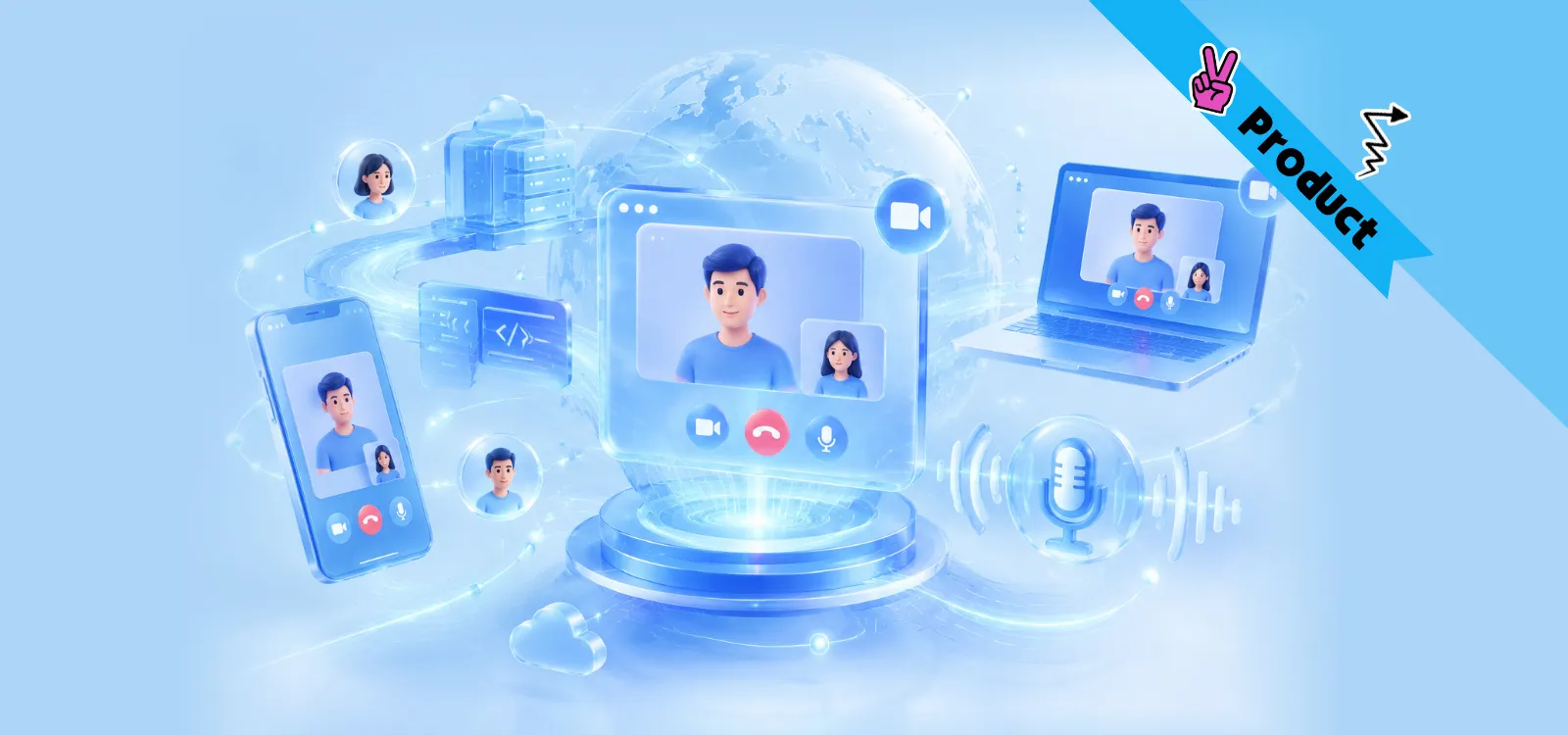
The digital world has hit a tipping point. In 2026, we are no longer just making tools; user engagement has become a core growth metric. According to Nexconn's 2026 In-App Connectivity Playbook, platforms that prioritize real-time communication see measurably higher retention and revenue per user compared to those relying on passive, notification-driven models.
In fact, 80% of users say the overall user experience of an app is just as vital as what it actually does. If your app lacks real-time communication touchpoints, users are less likely to engage or convert. By using a solid In-app Chat API, businesses are seeing a 123% jump in revenue growth (according to Nexconn's 2026 In-App Connectivity Playbook).
Includes 20+ pages of infrastructure insights and growth strategies.
At the same time, they are cutting service costs by 90% through intelligent automation and AI-assisted moderation. Businesses transition from purely transactional models to creating immersive environments where people want to spend their time and money.
Why Flutter is the Top Choice for Real-Time Growth
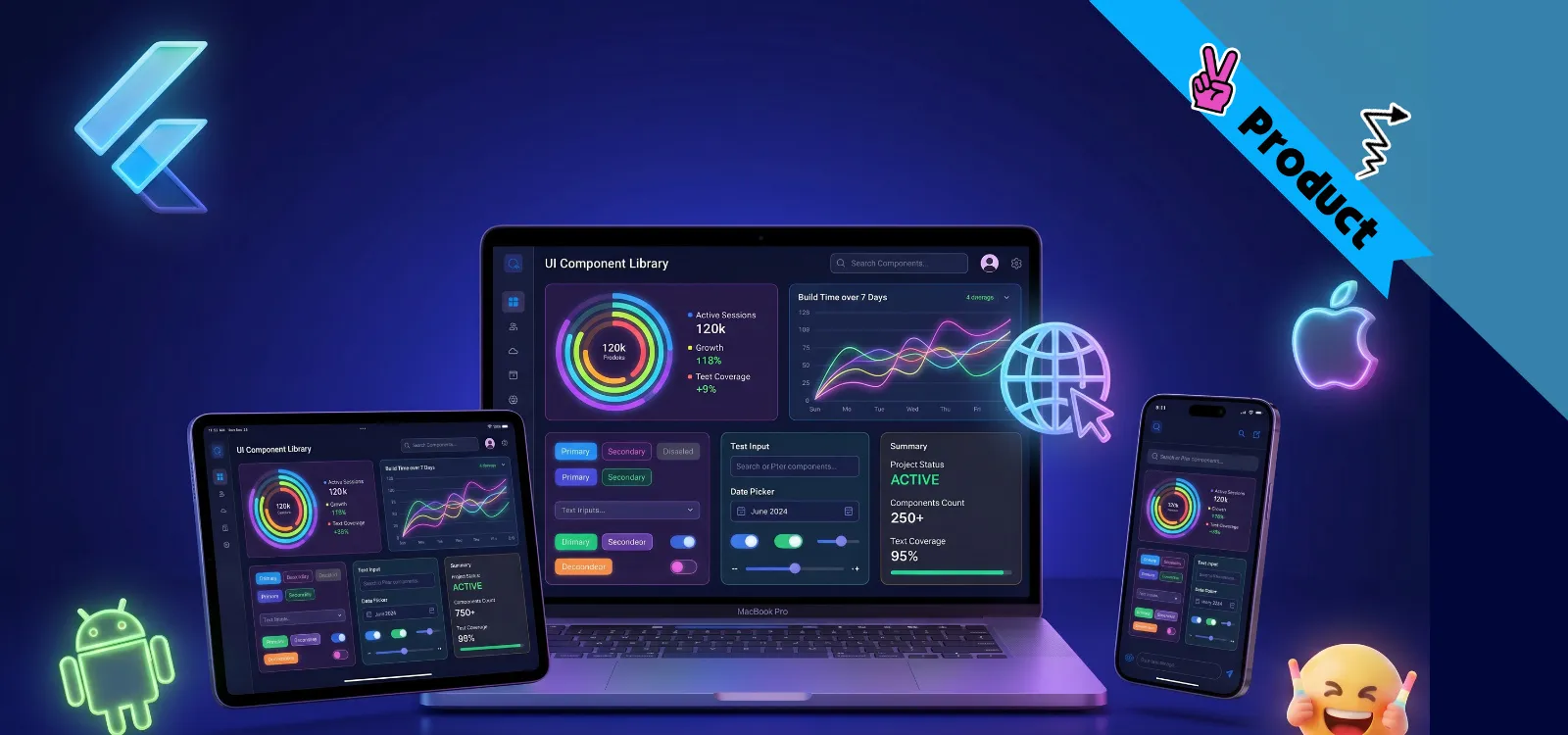
Flutter has changed how we think about fast growth. Flutter's single codebase compiles to native ARM code across platforms, delivering rendering performance comparable to native applications — a critical advantage when building message-heavy interfaces that require smooth scrolling and real-time updates.
In 2026, being first to market is your strongest competitive advantage. Flutter’s "Hot Reload" lets your team fix bugs and add new chat features rapidly. When you pair this speed with our Chat SDK, you aren't just building an app. You are building an interactive economy where every conversation can turn into a new lead or a closed deal.
Mapping Your Interaction Strategy: The Nexconn Matrix
In 2026, the technical hurdle isn't just sending a string of text; it's managing the complex logic of room states and user roles across different platforms. At Nexconn, we’ve simplified this into a "Channel Matrix." Think of these as strategic blueprints that save your Flutter team weeks of backend engineering. Depending on your business goals, you need to choose the right foundation:
Direct & Group Channels — Private, High-Intent Communication: If your Flutter app focuses on P2P marketplaces or fintech support, this is your starting point. It’s designed for high-intent, private talk. Instead of building a complex state manager from scratch, these channels handle member roles and relationship blocking out of the box. It’s the fastest way to turn a "transactional" app into a "relationship-driven" one, where trust is built in real-time.
Open Channels — High-Concurrency Public Rooms: Designed for scenarios requiring simultaneous communication at scale, such as live shopping events or competitive gaming broadcasts, Open Channels support millions of concurrent connections with sub-120ms message delivery. We refer to this architecture as a "Digital Stadium" — an environment where real-time interaction is the product itself.
Community Channels — Structured, Persistent Group Spaces: Community Channels provide a multi-layered discussion environment with persistent message history, role-based access control, and full data ownership — comparable to Discord's architecture but deployed entirely within your own infrastructure. This makes them well-suited for Web3 DAO governance, EdTech platforms, or any product where retaining user relationships in-house is a strategic priority.
How to Integrate Nexconn into Your Flutter App
We built our Enterprise Messaging API to be simple and robust. Here is how to get started with the Nexconn Chat SDK.
When the user logs out or the app is terminated, remember to call NCEngine.disconnect() to end the session and NCEngine.destroy() to release all resources, check out our full Flutter Documentation here.
Why Nexconn is the Best Choice for Your Infrastructure
In 2026, your tech stack is more than just code—it is your shield against losing users. If a chat message fails or lags, you don't just lose a line of text. You lose the user's trust and your real-world revenue. We didn't build Nexconn to be a simple pipe. Nexconn is built to handle the complexity of enterprise-grade messaging infrastructure — reliability, compliance, and moderation — so your engineering team can focus on product differentiation.
Here is why top teams use our Chat SDK as their backbone:
Global Speed, Local Feel: Our SD-CAN network spans over 3,000 nodes across 233 countries and territories, maintaining a 120ms end-to-end latency standard — imperceptible to the end user under standard network conditions. Data is routed through the nearest available node, minimizing cross-region latency regardless of where your users are.
Seamless Multi-Device Sync: A common pain point in multi-device messaging is state inconsistency — reading a message on mobile while the desktop client still shows an unread badge. Nexconn's Enterprise Messaging API eliminates this by automatically syncing chat state, unread counts, and message history across all active sessions. Whether your user is on an iPhone, an Android, or a web tab, the experience remains consistent.
Intelligent Safety Layers: As you grow, bad actors and spam become a nightmare. We put AI moderation directly into the communication layer. It filters text, voice, and even video in 20+ languages in real-time. This saves you roughly 90% on human mod costs and protects your platform's reputation.
Built-in Regulatory Compliance: Don't wait for a legal letter to think about privacy. Our setup has GDPR, ISO 27001, and SOC2 built into the bones. When you integrate Nexconn, you get out-of-the-box compliance coverage across major regulatory frameworks, ready for global deployment. You can launch in any market with total confidence.
Frequently Asked Questions
Does Nexconn's Chat SDK work with Flutter on both iOS and Android?
Yes. The ai_nexconn_chat_plugin is a Flutter plugin that includes both the Dart layer and native platform code for iOS and Android. A single integration covers both platforms — which is the primary reason Flutter teams choose it over maintaining separate native SDKs for each operating system.
What Flutter version is required to use the Nexconn Chat SDK?
The plugin requires Flutter with the standard SDK dependency configuration. CocoaPods 1.10.0 or later is required on iOS due to XCFramework support. For the most current version requirements, check the plugin's entry on pub.dev or the full Flutter documentation.
Can I use the Chat SDK without the full Nexconn infrastructure?
No. The SDK connects to Nexconn's backend infrastructure, including the SD-CAN network and signaling layer. You'll need an active Nexconn account and a valid app key to initialize the engine. For quick testing, the console provides a Get Token API that lets you generate a token without setting up your own authentication server.
What's the difference between Direct Channels, Open Channels, and Community Channels?
They serve fundamentally different interaction patterns. Direct and Group Channels are for private, high-intent conversations — marketplaces, fintech support, one-to-one messaging where trust and privacy matter. Open Channels are built for high-concurrency public scenarios — live shopping, gaming broadcasts, events where thousands of users interact simultaneously. Community Channels are structured persistent spaces — Discord-style hierarchies with role-based permissions and persistent message history, suited for DAO governance, EdTech platforms, or any product where community architecture is a core feature. Choosing the wrong channel type for your use case will create architectural problems that are difficult to refactor later.
How does the onMessageSaved callback differ from onMessageSent?
onMessageSaved fires when the message is stored locally on the device — before it reaches the server. This lets you display the message in the UI immediately, giving users the perception of instant delivery. onMessageSent fires when the server confirms receipt. For a production chat UX, you typically show the message on onMessageSaved and update its status indicator on onMessageSent.
Why must NCEngine.initialize() be called before connecting to the server?
initialize() sets up the communication engine with your app key and configuration parameters. Attempting to connect before initialization will fail because the engine hasn't registered your credentials or established the internal state required for a session. The correct order is always: initialize → register message handler → connect.
What happens to messages sent while the user is offline?
Nexconn queues undelivered messages and delivers them when the user reconnects. The offline parameter in the MessageHandler callback indicates whether a received message is a compensation message delivered after reconnection. The server delivers these in packages of up to 200, and the left parameter tells you how many remain in the current package — useful for showing a loading state while catching up on missed messages.
How does NCEngine.disconnect() differ from NCEngine.destroy()?
disconnect() ends the active session cleanly — it closes the connection to the server and stops receiving new messages, but leaves the engine initialized. destroy() goes further and releases all engine resources entirely. In practice, call disconnect() when a user logs out, and destroy() when the app is terminating or you need to fully reset the SDK state. Failing to call these correctly can cause resource leaks or unexpected behavior on the next initialization.
Does the SDK handle network interruptions automatically?
Yes. The SDK includes an automatic reconnection mechanism — which is why the documentation specifies calling connect() only once per app lifecycle. If the connection drops due to network instability, the SDK will attempt to reconnect automatically. You can track connection state changes through the addConnectionStatusHandler callback to update your UI accordingly — for example, showing a "reconnecting" indicator when the status changes.
Is the Nexconn Chat SDK suitable for apps with users in emerging markets?
The SD-CAN network is specifically designed for this. With 3,000+ nodes across 233 countries and territories, traffic routes through the nearest available node rather than crossing long-haul internet infrastructure. This matters considerably in Southeast Asia, the Middle East, and other regions where standard CDN-based routing introduces latency and delivery inconsistency. The 120ms end-to-end latency standard holds under real-world network conditions in these markets, not just in controlled benchmark environments.
Get Started — First Month Complimentary
We want you to experience these results firsthand. To help you ship faster and validate results in production, we have a very simple deal:
🎁 Start today: Subscribe to Nexconn now, and your entire next month is complimentary. 👇
Contact us
We'd love to discuss how Nexconn's real-time communication solutions can support your business. Request a demo, explore pricing, or get tailored onboarding guidance.