Best Chat APIs for Live Streaming & Voice Social: 2026 Comparison Guide
Amy
Solutions Engineer @Nexconn. Amy empowers teams in Web3, Social, Gaming, and Digital Services to scale through Chat/Call APIs & AI bots. She shares battle-tested playbooks to turn interaction into ROI.
See how you can launch live streaming chat and voice social rooms at $0 with our Free Chat API & Messaging SDK (10K MAU).
If you are researching how to build a voice social app or searching for the best chat API for live streaming, you've likely realized that standard messaging infrastructure isn't enough. Modern social platforms demand more than simple "ping-pong" text exchange; they require a high-performance broadcast engine capable of managing thousands of concurrent users and complex real-time states. At Nexconn, we've found that the real hurdle is a broadcast and synchronization problem that most generic SDKs were never architected to survive.
When 10,000 users are in a room and one person sends a message, the server doesn't just route it to a recipient—it performs a massive fan-out to every connected socket simultaneously. This 1:10,000 ratio dictates a total rethink of the backend's throughput capacity; standard "best-effort" infrastructure simply isn't built to survive that math without choking. And that's before you account for real-time room state that must stay synchronized at sub-200ms tolerances.
Real-Time Architecture for Live Streaming and Voice Social Apps
While both rely on Open Channel architecture, their demands are fundamentally different. Choosing the wrong one is an expensive architectural mistake.
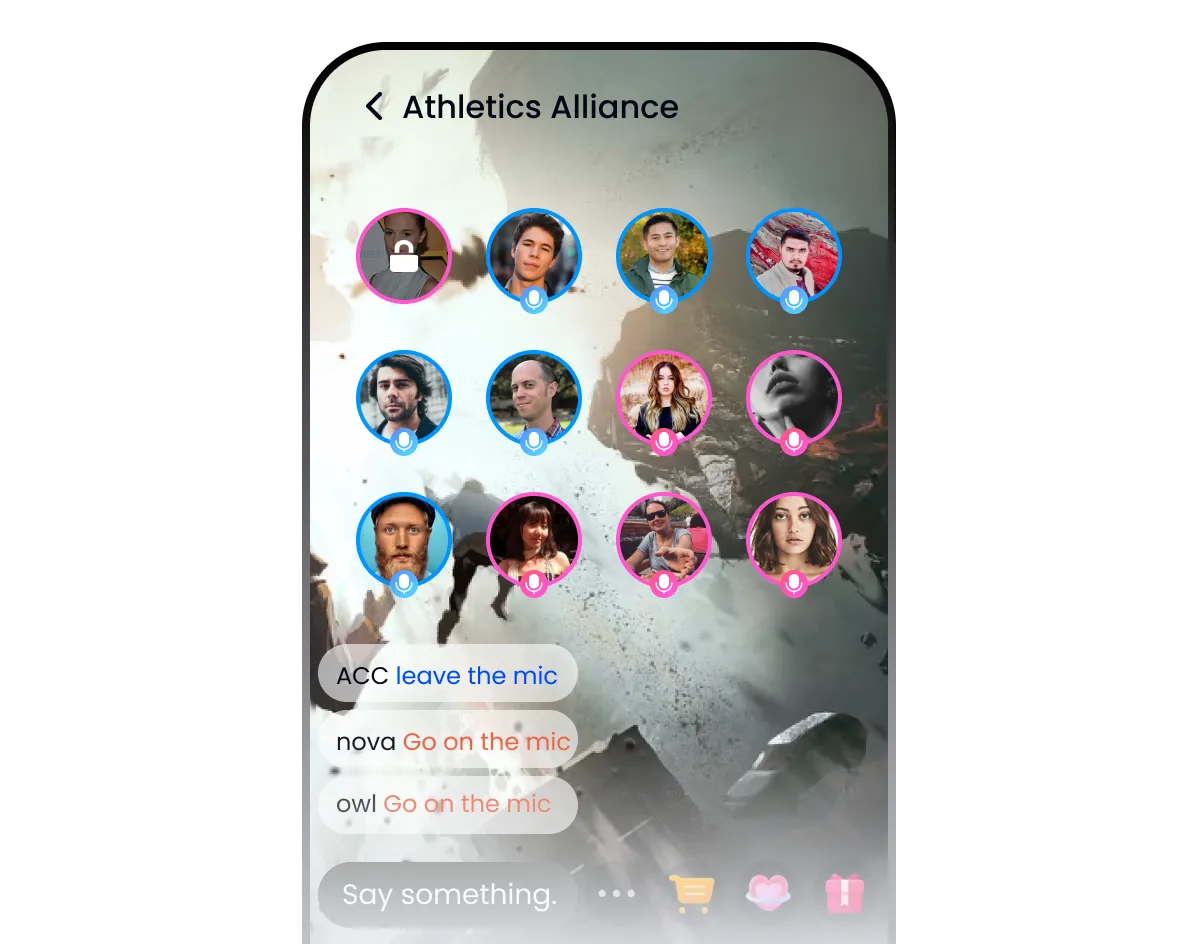
Voice Social Rooms are living, bidirectional environments. Mic seats rotate, roles shift, and interactive games run in real-time. The core challenge is maintaining a perfectly synchronized "ground truth" across all clients.
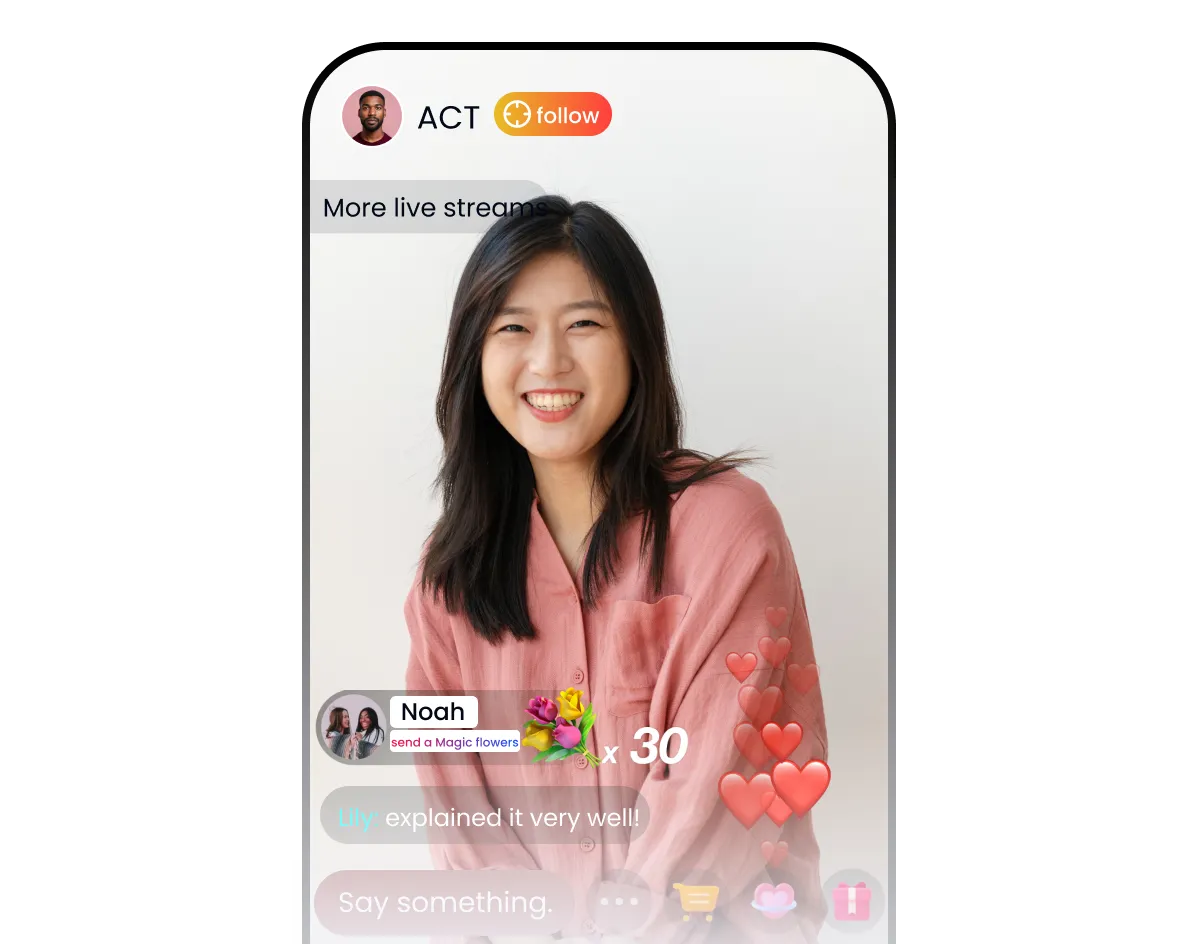
Live Streaming is a high-volume broadcast experience. The state complexity is lower than voice rooms, but the chat volume is exponentially higher. Success here means ensuring high-value signals—gifts, host commands—cut through the noise flood.
The table below breaks down where each use case puts the most pressure on infrastructure:
High — gift signals, purchase triggers must survive peak load
Whitelist need
Host and moderators
Host, featured guests, revenue signals
State persistence rules
Seat clears on disconnect; admin roles persist
Product info persists; session-specific data clears
Room preview
Member count, mic seat availability
Viewer count, current product, ongoing activity
Key Nexconn feature
Chatroom properties with KV sync, ghost mic prevention
Message priority, whitelist, status sync of live rooms
Nexconn's Open Channel architecture is one of the few that handles both use cases natively, without requiring teams to build separate state management systems on top of the messaging layer.
Virtual gifting is the lifeblood of revenue. When a whale drops a massive gift, that signal must hit every client simultaneously. Sequential delivery is a failure. If your infrastructure takes 500ms to ripple that signal, you create a "sync gap." This desync erodes trust and stops users from gifting.
2. The Data Triage Problem
Every server has a physical ceiling. When a room is redlining, your system must triage data. Without a native whitelist, the server is flying blind—it treats a critical mic-switch command the same as a viewer's "LOL" emoji. Nexconn's Chatroom Whitelist creates a "fast lane" for hosts, ensuring the room stays governable even during peak traffic.
3. Distributed State Management
Voice rooms depend on 100% seat consistency. This is a distributed state problem, not a messaging one. If one packet drops, you get "state drift"—where a locked seat appears open to half the room. Nexconn solves this with a structured Key-Value property system baked into the pipe, handling the heavy lifting of mic positions and PK scores natively.
4. The "Zombie" Mic
In voice rooms, users often vanish (e.g., entering an elevator) without a clean exit. Without sub-second heartbeat monitoring, they hold mic seats indefinitely. Nexconn ties room attributes directly to socket status. If a connection drops, the system triggers an automatic cleanup, healing the room instantly without manual intervention.
Nexconn Open Channels: Core Capabilities for High-Concurrency Interaction
Nexconn's Open Channel architecture was built specifically for the live streaming and voice social use case. A few capabilities that aren't standard elsewhere:
Capability
Technical Implementation
Business Value
Message Prioritization (QoS)
Native Quality of Service engine; prioritizes high-value signals (Gifts, Admin) while deprioritizing noise during peak load.
Revenue Protection: Ensures gift animations and moderation commands never lag or drop during traffic spikes.
Real-time State Sync
Structured Key-Value property system (100 pairs/room) with 100 ops/sec and guaranteed delivery ordering.
Perfect Synchronization: Keeps PK scores, product highlights, and game states identical for all viewers.
Automated Management: Allows backend servers to trigger auto-moderation or dynamic scaling based on real-time activity.
Global Broadcast
Platform-wide fan-out via a single API call to reach every active open channel simultaneously.
Operational Efficiency: Instant delivery of system alerts or marketing campaigns across the entire platform.
Passive Inspection
Room attribute retrieval without socket connection; draws directly from the room's persistent state layer.
Conversion Lift: Drives higher join rates by allowing users to preview live activity before entering the room.
Grab the 2026 In-App Connectivity Playbook for the full infrastructure roadmap—including delivery optimization for low-bandwidth markets and messaging API best practices.
Live Chat API Comparison: Evaluating the Best Industry Providers in 2026
Nexconn — Purpose-built for voice social and live streaming. Chatroom properties, message priority, whitelist, and broadcast to all rooms ship as standard API capabilities. The only platform in this comparison with native ghost mic prevention and room-state KV sync.
Sendbird — Solid Open Channel product. It lacks native chatroom property management — mic seat state and role assignments require custom backend work.
Stream — Clean API, strong developer experience. However, its chatroom property management (e.g., KV sync) and handling of high-frequency state updates require more custom work compared to Nexconn's native approach.
Agora — Strong RTC infrastructure. Chat is not the primary product. For teams needing the chat depth described here, it doesn't go as far.
PubNub — Real-time streaming roots, handles simpler live scenarios well. Social layer requires custom implementation. It charges by API transaction volume, creating unpredictable costs in high-message-volume live environments.
Start Building Your Social App Today
Ready to put this architecture into practice? We've prepared high-performance SDK tutorials for the most popular mobile frameworks to help you go from zero to live room in minutes:
Is there a real difference between a standard messaging API and a live streaming one?
Yes—it's a difference in DNA. Standard APIs are built for back-and-forth talk between two people. They choke when you throw 10,000 users into one room. Nexconn's Open Channel is architected for high-throughput fan-out from the first line of code, not just a generic toolkit with a "broadcast" sticker slapped on it.
How many concurrent users can Nexconn actually support in a single room?
There is no hard cap. Nexconn scales horizontally by distributing room membership across message service clusters. Whether you have 500 users or 500,000, the infrastructure expands with the room. For state management (mic seats, scores), we support 100 high-frequency attribute updates per second to keep everything in sync.
How does message priority work when the room is at peak traffic?
It's technical triage. When a room hits its physical limit, the server has to start dropping data. Without priority, it drops things randomly. Nexconn lets you protect revenue-critical signals—like gifts and host commands—while shedding low-priority noise like "LOL" emojis first. The business logic survives the spike; the noise doesn't.
Why do I need a "Whitelist" for my streamers and moderators?
To prevent losing control of the room. In a traffic flood, a moderator's "Mute" command shouldn't have to wait in line behind five thousand viewer stickers. Whitelisted users get a guaranteed VIP lane. It ensures that the people running the show can always be heard, regardless of how chaotic the chat gets.
How does Nexconn prevent "zombie" mic seats in voice social apps?
We tie room state directly to socket status. If a user on the mic loses their signal unexpectedly, Nexconn's property system triggers an automatic cleanup. The seat clears the millisecond the connection drops. No manual moderator intervention is required, and no "ghost" users block the mic for others.
What makes Nexconn the best choice for live commerce specifically?
Instant state synchronization. Live commerce is about moving products. Nexconn syncs pricing, product IDs, and promotional banners across all viewer clients simultaneously using our attribute system. When the streamer switches items, every viewer sees the update at the exact same millisecond—no separate product-state backend needed.
Contact us
We'd love to discuss how Nexconn's real-time communication solutions can support your business. Request a demo, explore pricing, or get tailored onboarding guidance.