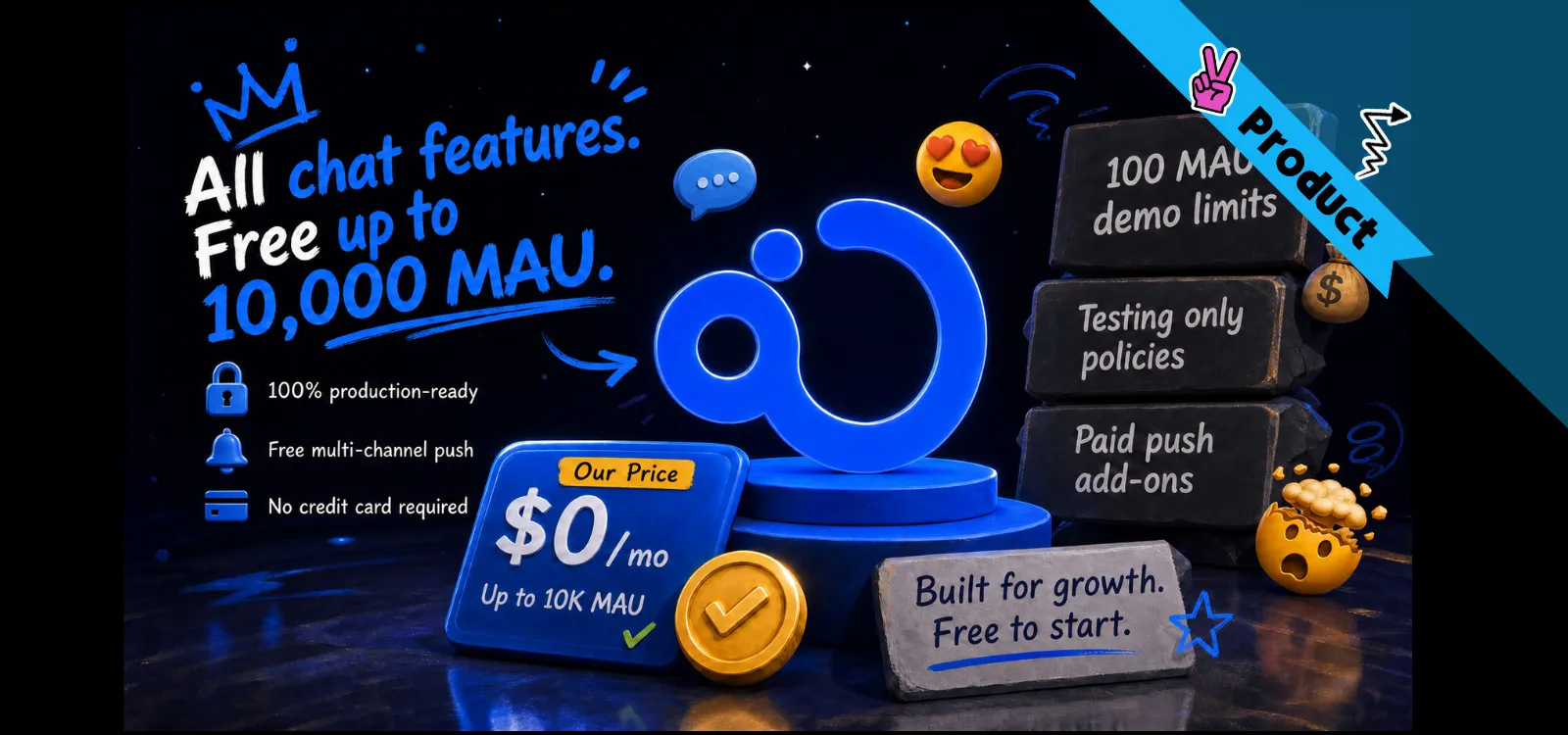
Moving from raw pub/sub to turnkey chat? Deploy our Free PubNub Alternative (10K MAU) with free migration assistance and built-in social channels at zero cost.
Finding the best PubNub alternatives in 2026 requires more than just swapping one messaging pipe for another. While PubNub is a powerhouse for raw data streaming, building a high-engagement social app on its infrastructure often means building significant additional logic on top of the platform to add basic in-app chat SDK features like friend lists or community roles.
Most developers looking for a PubNub alternative are looking for social-native chat infrastructure that understands the social graph — without compromising on the reliability that PubNub is known for. At Nexconn, we've analyzed how the leading in-app chat APIs stack up against PubNub's legacy pub/sub model to help you avoid massive engineering debt and unpredictable pricing.
Reasons Social & Chat Devs Are Switching from PubNub
The business logic doesn't come with it
A pub/sub platform moves messages. It doesn't know what a friend request is. It doesn't have an opinion about group ownership transfer, per-member follow alerts, or targeted messaging to a subset of group members. Teams building social apps on top of PubNub are writing that logic themselves — weeks of engineering work that has nothing to do with their actual product, and everything to do with the infrastructure choice they made at the start.
There's also no UIKit. No pre-built components. Every element of the chat interface gets built from scratch.
The cost model is hard to forecast
PubNub's billing combines a monthly base fee with per‑API‑request charges, making costs harder to forecast as engagement grows. In theory, this is flexible. In practice, it means that a feature that makes perfect product sense — more frequent presence updates, richer message metadata, higher poll rates — can have a non-obvious impact on your bill. Enterprise‑level technical support adds $1,500/month — a cost that surprises teams expecting support to be bundled.
The social layer is not included by default
PubNub was engineered for moving telemetry data between millions of machines—it is an infrastructure for IoT, not human interaction. While a machine might not mind a slight delay in a sensor update, human users are hyper-sensitive to the "micro-latency" that defines a social experience.
For a complete blueprint on managing global chat architecture and delivery optimization, access our latest resource before we dive into platform specifics:
The Top 5 PubNub Alternatives for In-App Chat in 2026
Nexconn — A Purpose-Built Social Engine
The real gap between Nexconn and generic messaging providers is about what the infrastructure was built to do from the ground up. While others leave the social logic to your backend team, Nexconn bakes the entire social fabric into the routing layer.
1. Structural Product Architecture: From 1:1 to Million-Member Ecosystems
Nexconn provides a tiered architecture that mirrors how real communities grow, eliminating the need to "hack" a messaging pipe into a social product.
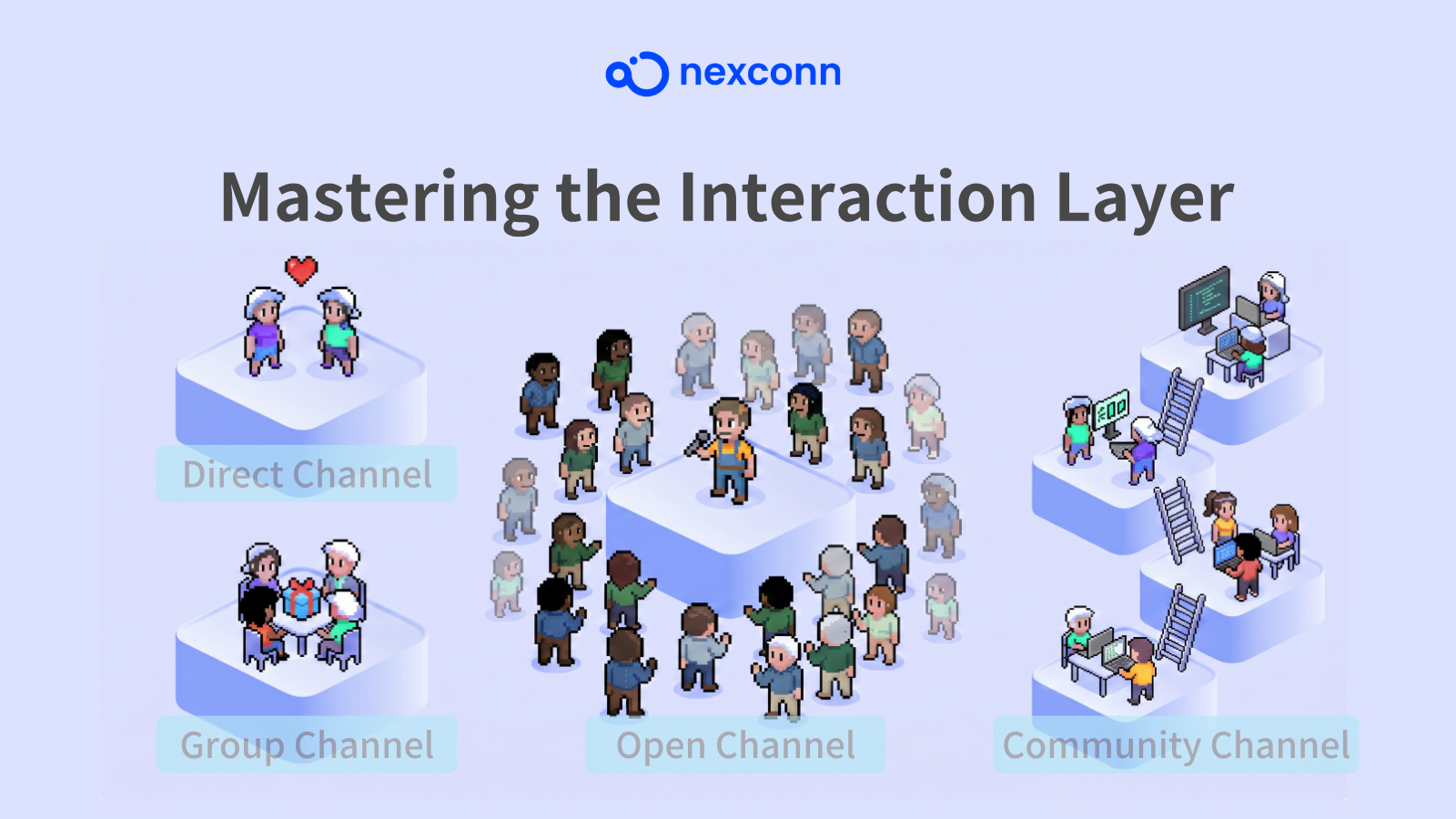
The Native Social Graph: Unlike generic pub/sub models that don't include a built-in relationship layer, Nexconn ships with a complete, native relationship layer. Friend management (add/block/request flows) and group ownership transfers are built-in infrastructure primitives. You aren't building a friend system from scratch; you're just calling it.
Discord-Style Community Hierarchy: For massive scale, Nexconn's Community Channels provide structural depth that competitors lack. We support millions of members with a native hierarchy of public and private sub-channels, role-based permissions, and persistent history. It's a "Discord-in-a-Box" solution that handles structured governance as a first-class citizen.
2. Comprehensive Interaction Design: Precision, Priority, and Flow
The Nexconn SDK doesn't just deliver data; it orchestrates interaction.
Operational Granularity: Nexconn enables targeted interaction—reaching specific members within a group without a noisy broadcast, or using our multi-mode broadcast engine to reach users based on tags, online status, or specific chatrooms simultaneously.
Quality of Service (QoS) & Protection: In high-concurrency "Open Channel" scenarios, Nexconn ensures the "vibe" never dies. We use a technical triage system—native whitelisting for hosts and QoS message prioritization—to ensure revenue-critical signals like virtual gifts and host commands bypass the "emoji flood" during peak traffic spikes.
Intelligent Engagement Signals: Features like per-member follow alerts (which can penetrate Mute/DND settings) are designed at the protocol level to drive retention.
Includes 20+ pages of infrastructure insights and growth strategies.
Nexconn vs. PubNub:
The following matrix compares PubNub's generic messaging pipe with Nexconn's social-native infrastructure across 10 critical performance and business dimensions.
Dimension
PubNub
Nexconn
Nexconn Advantage & Business Value
Pricing Model
Per-API-request + monthly base fee (unpredictable).
MAU‑based (starting at $260/mo).
Cost Control: Eliminates “success taxes” caused by high user engagement.
MAU Overage
$0.15 / MAU
$0.12 / MAU
20% Lower Scaling Cost: Direct margin improvement as your user base grows.
Network Infrastructure
Public internet Pub/Sub (standard).
SD‑CAN dedicated acceleration.
Global Reliability: Sub‑120ms latency in SEA and MENA markets.
Community Architecture
Flat streams; no native sub‑channel support.
Discord‑like hierarchy (sub‑channels & roles).
Structured Retention: Built for millions of members with granular governance.
Native Social Logic
Not included by default (requires custom backend development)
Full Friend Mgmt & Mute Penetration.
Lower Dev Debt: Social relationship logic provided out of the box.
Message History
100‑message in‑memory cache (persistence is paid add-on).
Persistent & configurable history.
Seamless UX: New members inherit full context without a separate database.
Broadcast Capabilities
Manual implementation only.
4 native modes (Global, Online, Tag, Room).
Operational Precision: Reach specific segments without notification fatigue.
High‑Load Reliability
Best‑effort only (no prioritization).
Native QoS + User Whitelisting.
Revenue Protection: Prioritizes gifts and admin commands during traffic spikes.
UIKit & Components
Not included (no official UI components)
Available for iOS, Android, Flutter, JS.
Developer Velocity: Rapid integration to launch your chat experience.
Data Observability
Requires third‑party tools or manual logs.
Polaris native monitoring system.
Operational Agility: Real‑time visibility into connection and delivery status.
Sendbird Sendbird is a "safe" choice for large-scale procurement due to its thorough documentation and broad SDK support. However, its pricing model — with peak concurrent connection ceilings and overage fees — means that rapid growth can significantly increase costs, a factor that teams should model carefully against their expected scale.
Twilio Twilio's value is vendor consolidation—offering SMS, Voice, and Chat under one roof. While convenient for teams already in their ecosystem, Twilio's in-app chat has not received the same level of investment as its core carrier infrastructure — as evidenced by the deprecation of Programmable Chat in favor of Conversations. It lacks the specialized social depth and low-latency optimization found in dedicated, social-native engines.
Stream Stream is highly respected for its clean API design and polished UI Kits, making it ideal for standard social feeds. The trade-off appears at the edges: implementing multi‑layered community governance (e.g., Discord‑style sub‑channels with role‑based isolation) that requires more custom work than Stream's out‑of‑box permissions model.
Ably Ably solves PubNub's reliability issues with superior delivery guarantees and state recovery. However, it remains a transport layer, not a chat product. It lacks native social logic and UI components, meaning your team will still be building the "chat" part from scratch.
Frequently Asked Questions
Q1
What is the most reliable PubNub alternative for high-scale apps?
It comes down to network architecture. Nexconn utilizes a dedicated SD-CAN (Software Defined - Communication Acceleration Network) with 3,000+ global nodes.
Sub-120ms Latency Guarantee: Ensures a consistent sub-120ms latency standard globally — a level of consistency that standard pub/sub pipes are not optimized to deliver in real-world conditions.
Q2
Which chat APIs include a native social relationship layer?
Nexconn is one of the few platforms that ships a complete Social Graph natively out of the box:
*Competitors offer partial features, but most require your backend engineering team to build significant social logic on top of their infrastructure.
Q3
Is PubNub actually suitable for building a modern social app?
PubNub is great for moving raw data packets, but it has no "opinion" on social structure. If you use it for chat, you'll spend months building your own persistence layer (to bypass their 100-message cache limit) and community governance.
The Nexconn Advantage: Nexconn provides the complete engine, not just the pipe — reducing your engineering debt by months of backend infrastructure work.
Q4
Can I build a Discord-like community structure on these platforms?
Not natively on PubNub, which relies on flat streams lacking native hierarchy.
"Discord-in-a-Box" Solution: Nexconn's Community Channels support millions of members with native public/private sub-channels and role-based permissions — turning a messy group chat into a structured ecosystem.
If you're evaluating your options, the In-App Connectivity Playbook 2026 covers the architectural decisions behind real-world chat deployments — network selection, channel architecture, delivery optimization in low-bandwidth markets, and the social layer decisions that affect retention at scale.
We'd love to discuss how Nexconn's real-time communication solutions can support your business. Request a demo, explore pricing, or get tailored onboarding guidance.