Every app that starts with typing eventually needs a moment where typing isn't enough. A support ticket that should have been a two-minute phone call. A dating match that wants to hear the other person's voice before meeting. A telehealth consultation where a clinician needs visual or vocal cues to make an assessment that text alone can't support. At that point, the question stops being "should we add calling" and becomes "how."
A Call API is the answer most engineering teams land on, and this guide covers what it actually does, how it differs from a Call SDK, what Nexconn's Call API includes, and where the current field of providers stands — including a shift at Twilio that changes the calculus for anyone comparing options this year.
What Is a Call API?
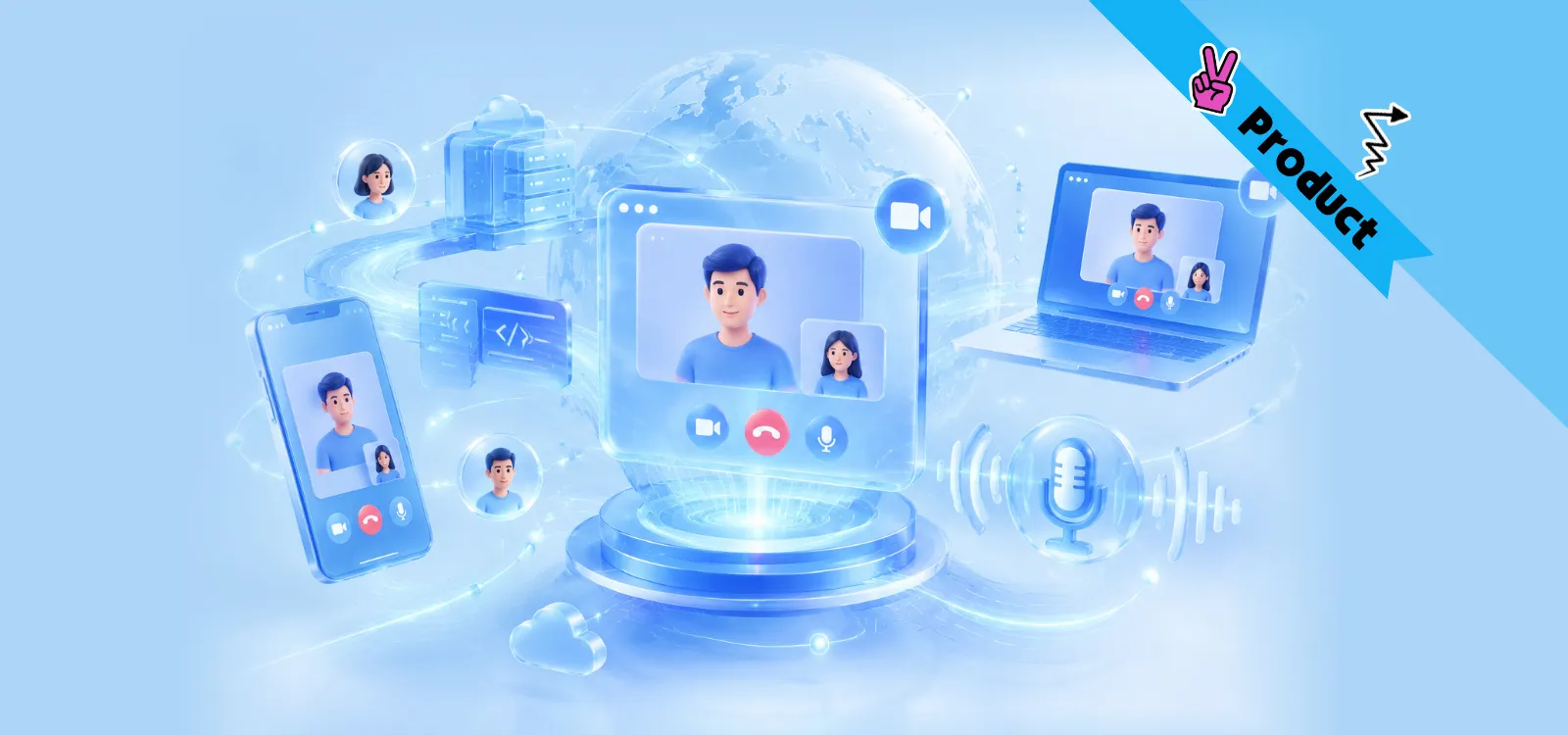
A Call API is the backend interface that lets an application create, manage, and connect real-time voice or video calls without building the underlying communication infrastructure from scratch. It handles signaling — the negotiation that lets two devices coordinate codecs, media paths, and connection parameters — session management, and the routing that keeps a call alive as network conditions change.
Building this layer in-house means solving problems that have nothing to do with the actual product: NAT traversal, STUN/TURN relay servers for users behind restrictive networks, codec negotiation, and reconnection logic for a user who walks from Wi-Fi into a parking garage. A Call API absorbs that complexity so a team can call an endpoint, get a session token, and start a call.
It's worth separating this from a Chat API, which handles asynchronous or near-real-time text, media, and file exchange. The two often live in the same product — a support conversation that starts as chat and escalates to a call — but they solve different problems and are usually evaluated separately, even when sourced from the same vendor.
Call API vs. Call SDK: What's the Difference?
The terms get used interchangeably, but they describe two different layers of the same stack.
The API is the server-side contract: the requests an app's backend makes to create a call session, generate access tokens, register webhooks, and pull call metadata after the fact. It's what a backend engineer touches.
The SDK is the client-side library — for iOS, Android, Web, or Flutter — that a mobile or frontend engineer drops into the app to actually render the call: requesting camera and microphone permissions, drawing video tiles, and exposing the mute/hang-up controls a user taps.
A vendor's SDK talks to that vendor's API. Most teams don't get a meaningful choice between the two — they need both, from the same provider, so a call created on the backend is seamlessly connected and rendered on the frontend without a translation layer in between.
What Nexconn's Call API Includes
1:1 and group calling. Nexconn's Call API adds a direct voice or video call with a few lines of code, without the app ever having to manage raw media stream data — the signaling layer is designed for reliable session establishment rather than best-effort connection. Group calling extends the same session model to multiple participants, with built-in controls for adding people mid-call and managing individual microphones and cameras.
Webhook events. Every call is also a sequence of events — started, joined, muted, ended — and Nexconn pushes those events to an app's own server in real time. That's what lets a call feed a CRM, trigger a billing event, or flag a support escalation without the app having to poll for status.
Cloud real-time recording. Nexconn records calls as they happen, with support for both individual stream capture and mixed recordings, saved across multiple storage formats — built for compliance, dispute resolution, and training use cases rather than as an afterthought bolted onto the call flow.
AI streaming voice recognition and translation. This is where Nexconn's Call API goes further than a baseline connection layer. Streaming speech recognition converts a live call into text as it happens, at low enough latency to drive live captions rather than a delayed transcript. Streaming voice translation takes that further, converting speech in one language into audible speech in another in near real time — a capability that carries real weight for teams operating across Southeast Asia or the Middle East, where a single app's user base can span a dozen languages in the same call.
AI summarization. After a call ends, Nexconn can distill the recording into a structured summary using customizable templates, so a support call or a sales conversation leaves behind something a team will actually read instead of a transcript nobody opens.
Prebuilt UI Kit. Alongside the SDK, Nexconn ships a UI Kit — call screens, controls, and states already built — so integration means customizing an interface instead of building one from a blank canvas.
Audio/video AI moderation. For any product where calls happen between people who don't already know each other — social discovery, live audio rooms, marketplaces — Nexconn checks live audio and video streams across multiple safety dimensions in real time, rather than relying on after-the-fact reports.
Why Latency and Compliance Aren't Separate Conversations
Two things determine whether a Call API is usable in production, and they're related.
The first is latency, which depends on how close a provider's network actually gets to the user making the call. A "global" network is only as good as its weakest region — a provider with strong coverage in North America and Europe can still produce a noticeably worse call for a user in Jakarta or Riyadh if it doesn't have real infrastructure there. Nexconn's Call API runs on a global real-time call network built around this specifically, rather than treating emerging markets as an edge case.
The second is compliance, and it stops being optional the moment a product handles calls involving minors, health information, or EU or California residents. Nexconn's Call API carries ISO 27001 and ISO 27701 certification for information and privacy management, ISO 9001 for quality management, and SOC 2 for security controls, alongside explicit support for GDPR, COPPA, and CCPA. Those aren't a checkbox for a security questionnaire — they determine whether a legal or procurement team will approve the vendor at all, often before an engineering team gets to evaluate the technical fit.
Where the Call API Landscape Stands in 2026
Most teams evaluating a Call API end up looking at the same two or three names, and the picture for each has shifted recently.
Twilio has long been the default reference point for programmable communications, but its recent trajectory with video illustrates the risks of vendor roadmap volatility. After initially announcing that Programmable Video would reach end-of-life and pointing customers toward Zoom, Twilio subsequently reversed course and kept the product alive. While the product remains available, the episode left many engineering teams wary of building critical real-time infrastructure on a platform that treated video as an uncertain priority. For anyone evaluating a long-term foundation, architectural stability and platform commitment matter as much as features.
Agora, one of the earliest dedicated real-time communication platforms, offers broad global coverage but prices usage by resolution tier — audio, HD, Full HD, and 2K video are each billed at a different per-minute rate. That model rewards teams that can tightly control the quality of every stream, but it also means the bill shifts whenever call quality or participant mix changes, which is worth modeling against realistic usage before committing at scale rather than after the first invoice.
Nexconn's advantage isn't a single feature — it's the combination of a global network built for emerging markets, a full communication stack on one platform, AI capabilities that are architecturally fused with the communication layer rather than bolted on, and a compliance and delivery track record that includes national-scale projects. For teams building for Southeast Asia, the Middle East, or any market where network conditions are unpredictable, that combination is what separates a call feature that works in a demo from one that works in production.
Getting Started
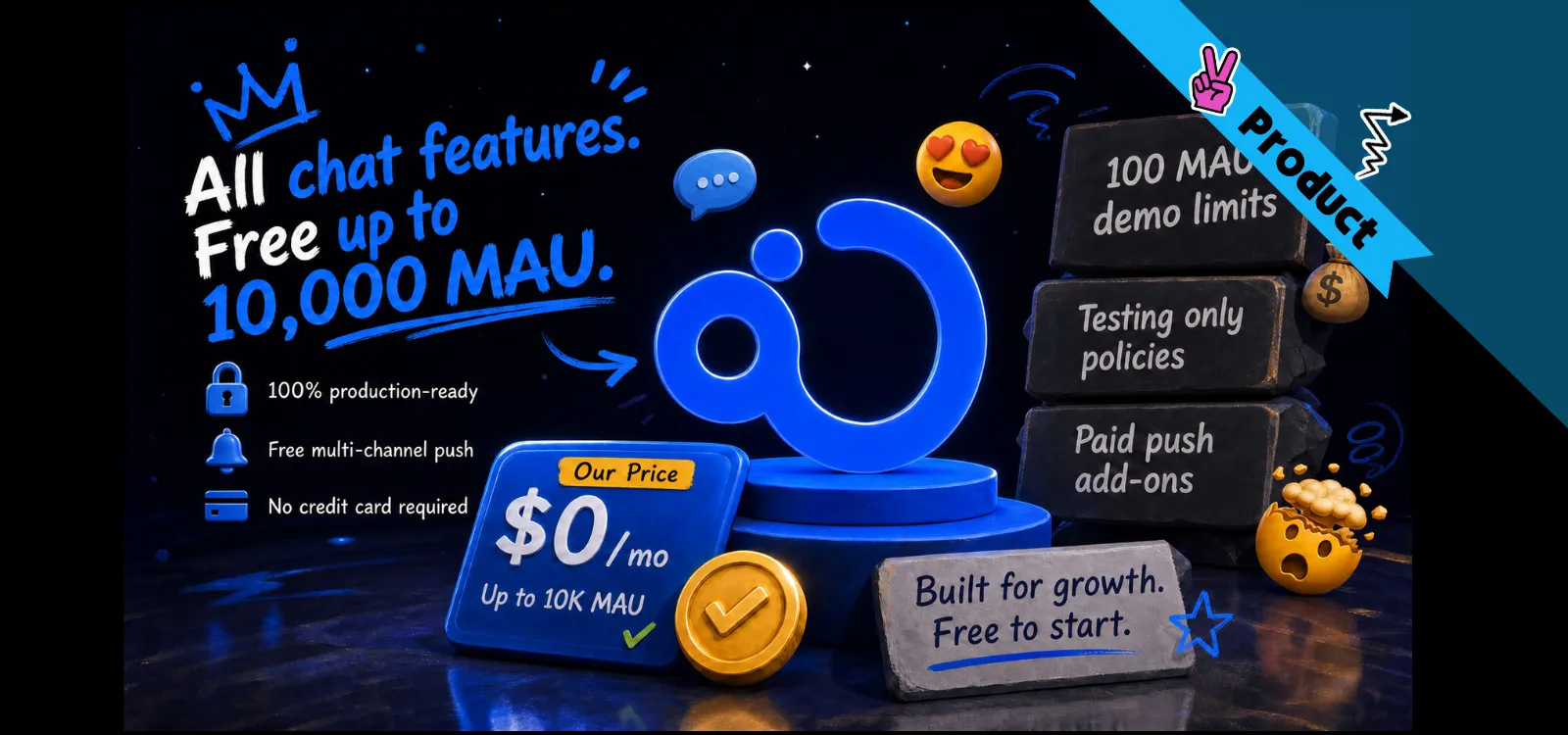
The fastest way to evaluate any Call API is to build the smallest possible version of the feature a product actually needs — a single 1:1 call, end to end — before comparing pricing tiers or reading a feature matrix. Nexconn's Call API is available to start for free, with the full SDK, UI Kit, webhook events, and AI speech capabilities included from the first integration.
We'd love to discuss how Nexconn's real-time communication solutions can support your business. Request a demo, explore pricing, or get tailored onboarding guidance.