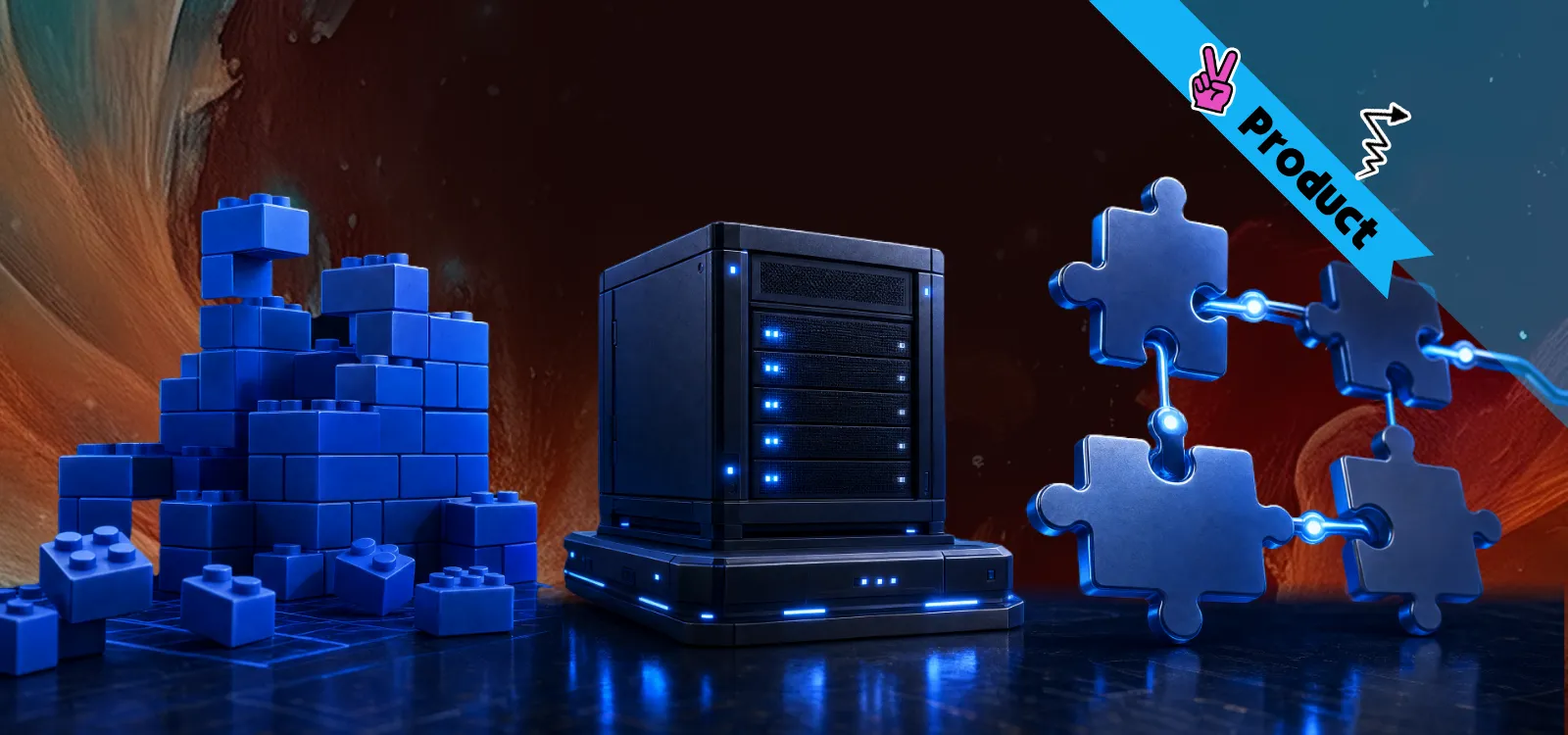
When adding real-time chat to a modern product, engineering teams typically face a three-way decision: Build it from scratch, self-host an open-source server, or integrate a managed SDK.
On paper, open-source platforms often look like the ideal compromise between the engineering overhead of building from scratch and the high costs of commercial SDKs. In production, however, self-hosting often combines the worst of both worlds: the operational burden of a custom build and the feature limitations of an open-source community edition. By Year 2, once dedicated DevOps overhead, socket scaling, and mobile push upkeep are factored in, "free" open source often turns out to be the most expensive architectural path per active user.
For most engineering teams, the economic equation is straightforward: committing months of engineering capacity to messaging infrastructure before validating Product-Market Fit (PMF) represents a severe misallocation of capital.
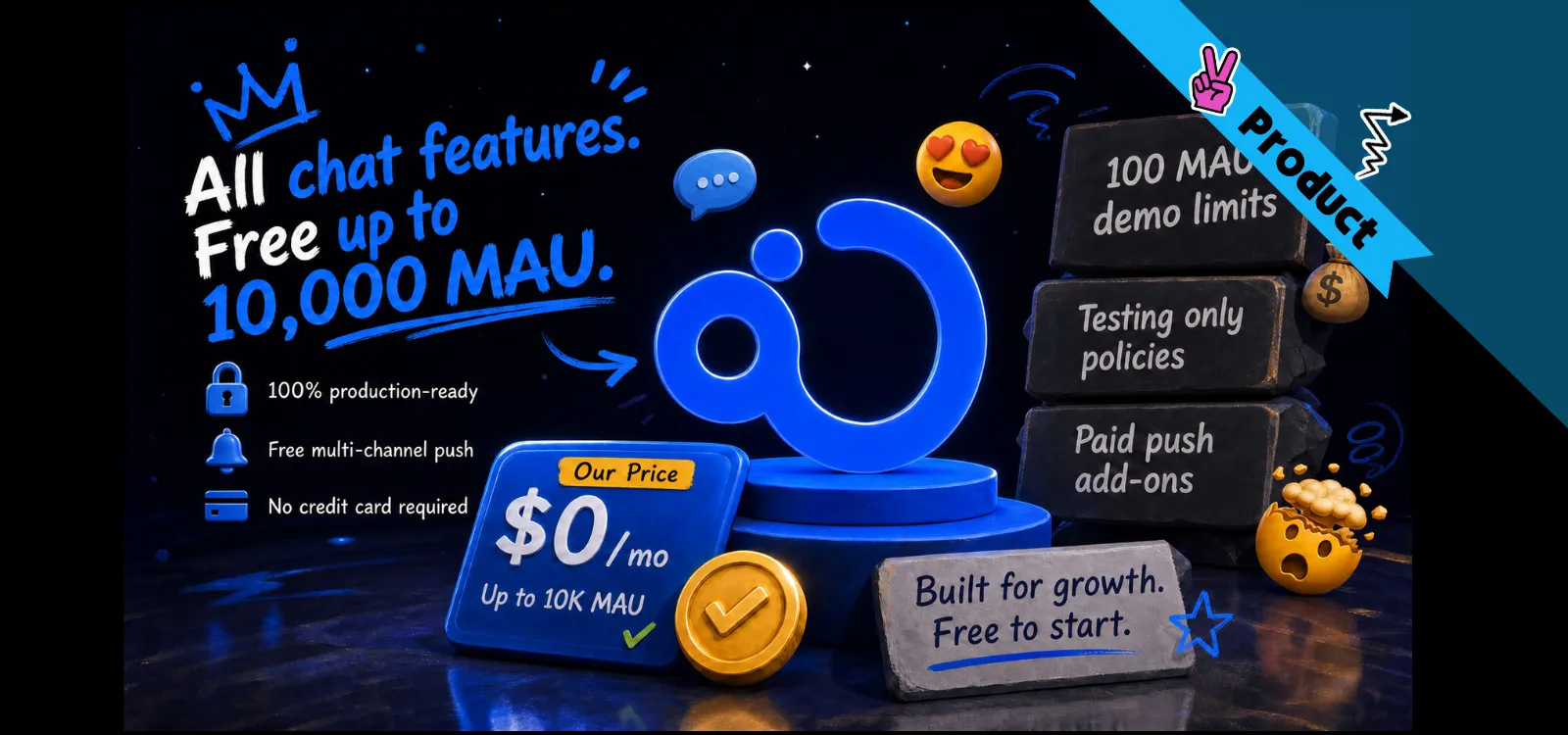
The availability of the Nexconn Production-Ready Free Plan—which unlocks a full Pro-tier feature set for up to 10,000 MAU/mo at $0—has fundamentally redefined the Build vs. Buy calculation for chat infrastructure in 2026.
Here is what each architectural path actually costs in time, maintenance overhead, and real-world capital across a two-year lifecycle.
Architecture Breakdown: What Each Path Actually Delivers
Before comparing costs, here's what each path actually means in practice.
Path
What It Means
Who It's For
Custom In-House
Building servers, WebSocket gateways, databases, push infrastructure, and delivery guarantees from scratch
Chat is your product's core IP; you have 5+ backend engineers; budget is not the primary constraint
Open-Source Self-Hosted
Deploying and operating Matrix, Rocket.Chat, or similar, with custom modifications
You want to avoid license fees and have dedicated DevOps resources to maintain server infrastructure
Managed SDK / Free Offer
Integrating a managed SDK (like Nexconn) — zero backend infrastructure or socket ops to operate
Fast time-to-market; validating PMF; engineering headcount is focused on core user-facing features
What does each path actually deliver when you need to ship a production app?
Dimension
Custom In-House
Open-Source Self-Hosted
Managed (Nexconn)
Time to production
6–12 months
1–2 weeks to demo; 3–6 months to prod
1–3 days SDK integration
Source code control
Full
Full
API-level control
License / subscription
$0 (you pay engineering salaries)
$0 (you pay engineering salaries)
$0 under current 10K-MAU offer*
Message reliability (ACK/retry/dedup)
Must build from scratch
Basic support; needs custom logic
Built-in at infrastructure layer
Push notifications (APNs/FCM/OEM)
3–5 months of OEM-specific work
FCM only; OEM requires custom work
Native support for all major channels
Weak network resilience
Custom QUIC/protocol required
Not supported out of the box
Optimized transport with resilience under poor network conditions
Friend / relationship system
Design from scratch (2–3 months)
Basic groups only; no request workflow
Native request-based friend system
Community Channels (nested)
Complex project (3+ months)
Not supported
Native Community Channels
Multi-mode broadcast (4 types)
Build from scratch (1–2 months)
Not supported
Native broadcast capabilities
Message history retention
Custom (you pay storage infrastructure)
Custom (you pay storage infrastructure)
180 days under current offer*
Compliance (GDPR/SOC2)
Self-certification (6+ months)
Self-certification (6+ months)
Inherit platform certifications
Annual engineering cost (Year 1)
$120K–$300K+
$80K–$150K+
$0 under current 10K-MAU offer*
Annual engineering cost (Year 2+)
$80K–$150K/year
$60K–$120K/year
Scales with growth; smooth upgrade path
*Note: Figures in the Managed column reflect Nexconn's Production-Ready Free Plan. If you are evaluating traditional commercial providers (such as Sendbird, Stream, CometChat, or PubNub) and want to see how their $0 and entry-level tiers compare, see our comprehensive 2026 Free Chat SDK Comparison.
The False Middle Ground: The Hidden Costs of Self-Hosting
Looking at the matrix above, the case against building entirely from scratch is clear-cut: burning six to twelve months of runway to reinvent core messaging primitives is an obvious non-starter for pre-PMF teams.
Because a custom in-house build is clearly impractical for early-to-mid-stage teams, engineers almost always gravitate toward what looks like the perfect middle ground: open-source self-hosting.
In reality, self-hosting is the most deceptive path in software architecture: it doesn't eliminate the cost of a custom build; it simply converts development hours into an ongoing, unpredictable operational tax.
Here is what that "free" middle ground actually costs once it touches production.
1. The Six-Figure Infrastructure Tax Behind "Free" Code
Open source gives you source code and a self-hosting option. It does not give you:
Server hosting and scaling
Storage and backup infrastructure
Security patches and upgrades
Push notification integration across OEM channels
Moderation and abuse controls
Mobile app lifecycle handling
24/7 incident response
Compliance and data retention policies
The moment your product needs any of these in production, you're building them yourself — or paying someone to build them for you. Matrix and Rocket.Chat provide solid foundations, but building a production-grade service on top of them requires significant additional engineering for operations, scaling, and features like push notifications.
While a bare-bones Matrix instance for personal testing can run on a basic $5-$15/month VPS, operating a production-grade team deployment with multi-user federation, dedicated PostgreSQL, media storage, and Coturn relays realistically scales raw infrastructure costs to $80-$250+ per month—even before factoring in dedicated DevOps maintenance hours.
2. The "Upstream Merge" Trap
You fork an open-source project, customize it for your use case, and ship. Then the upstream project releases a new version with security patches and features you need. Merging your custom code back into the new release becomes a genuine headache.
This isn't a rare edge case — version-upgrade issues are a well-known challenge in the self-hosted community, often consuming significant engineering hours.
At that point, you're not really using open source anymore. You're running a private fork with all the maintenance burden of a custom build and none of the community support.
3. The "Community Edition" Ceiling
Many open-source chat projects deliberately gate production-grade features behind commercial licenses. As one industry analysis puts it, community editions are often pared down enough that no company can comfortably run them in production, while the features that would actually make that possible sit behind a commercial license — open source in the shop window, a license at checkout.
The pattern is concrete with Rocket.Chat specifically: the free, self-hosted Starter tier tops out around 50 users. Beyond that, you're looking at Pro or Enterprise pricing, which runs roughly $8 per user per month or more, billed annually. The "free" open-source project has a very real price tag the moment you actually need to scale past a small internal team.
4. The Day-Two Burden of Real-Time Operations
Building a production-grade chat platform requires solving problems that open-source projects don't touch:
WebSocket connections are long-lived and stateful, introducing challenges that traditional HTTP services don't have
Scaling with user growth often becomes a cost issue rather than just an infrastructure issue
Message delivery lag and per-connection metrics require custom monitoring
Push notifications across iOS, Android, and web require provider failover logic
Moderation tooling, abuse handling, and reporting workflows need to be built or integrated
Industry analysis has put a useful bar on this: building chat from scratch starts to make sense only when three things are true at once — chat is a core differentiator of your product, you have at least three or four senior backend engineers willing to own real-time infrastructure for the long haul, and you're operating at a scale (typically 1M+ MAU) where vendor costs would outweigh the cost of building. Below that bar, the math rarely works out in the build's favor.
12-Month TCO: Three Scenarios, Three Outcomes
Team Profile & Use Case
Custom Build Cost
Open Source Cost
Nexconn
Recommended Path
Chat-centric startup (Social, Dating, Gaming, Live Community)
What's the real difference between open-source self-hosting and a custom build?
Open source saves you the "write everything from scratch" initial engineering work. It does not save you operations, push integration, moderation, weak-network optimization, or relationship-layer features. In practice, it turns "writing code" into "modifying code and fixing bugs" — which often takes just as long as building would have.
What does Nexconn's offer give me that open source doesn't?
Everything that makes chat work in production: OEM push channels, 180 days of message history, a request-based friend system, nested Community Channels, multi-mode broadcast, and a global routing layer built for lower latency under degraded network conditions. Open source gives you a message bus. Nexconn's offer gives you a complete social infrastructure layer, at no cost, for a defined period.
What happens if my app scales past the 10,000 MAU limit?
Your app continues running — user messages are not rejected. Nexconn bills predictably for actual overages at $0.12 per additional MAU and $0.90 per additional concurrent connection, with no forced enterprise contract or opaque pricing. You only pay for what you use, at rates disclosed before you commit.
How does Nexconn's offer compare to Tencent RTC Chat's free tier?
Tencent RTC Chat's free tier includes 1,000 MAU with 7-day message retention. Nexconn's offer runs at 10,000 MAU with 180-day retention, a meaningfully larger ceiling for teams trying to validate a real product rather than a small-scale prototype.
Ready to see what a feature-complete offer can actually support? Start building on Nexconn — no credit card required.
We'd love to discuss how Nexconn's real-time communication solutions can support your business. Request a demo, explore pricing, or get tailored onboarding guidance.